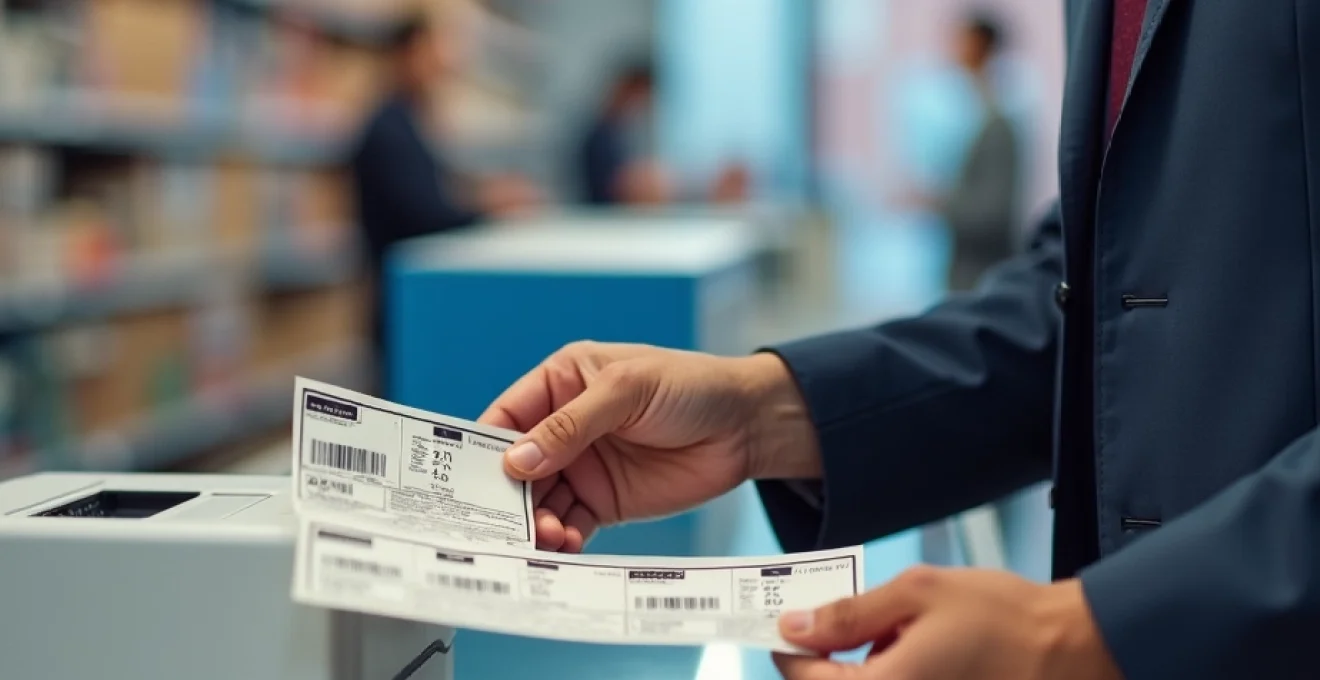
Modern businesses across industries have increasingly turned to thermal printing technology for their ticketing needs, transforming how organizations handle customer transactions and event management. From transportation hubs to entertainment venues, thermal ticket printers have become the backbone of efficient operations where speed, reliability, and cost-effectiveness are paramount. This technology addresses critical business challenges by delivering professional-quality tickets without the complications associated with traditional ink-based printing systems.
The shift toward thermal printing represents more than just a technological upgrade—it reflects a fundamental change in how businesses approach operational efficiency. Organizations that previously struggled with maintenance-heavy printing systems now benefit from streamlined processes that reduce downtime and operating costs. As customer expectations for quick service continue to rise, thermal ticket printers provide the reliable foundation businesses need to meet these demands while maintaining professional standards.
Thermal printers offer reliable High-Speed printing
Speed remains a critical factor in customer satisfaction across all service industries. Thermal ticket printers excel in high-velocity environments where every second counts, producing professional tickets at rates that often exceed 20 lines per second. This rapid output capability ensures that customers spend minimal time waiting for their tickets, whether they’re purchasing movie tickets during peak evening hours or boarding passes during busy travel seasons. The technology behind thermal printing eliminates the mechanical delays associated with traditional impact printers, which typically operate at slower speeds of approximately three lines per second.
The reliability factor extends beyond simple speed measurements to encompass consistent performance under pressure. Unlike conventional printers that may experience slowdowns due to ink flow issues or mechanical wear, thermal printers maintain their performance levels throughout extended use periods. This consistency proves invaluable for businesses that experience fluctuating demand patterns, from quiet morning hours to peak evening rushes. Ticket printer technology has evolved to meet these demanding operational requirements while maintaining exceptional print quality standards.
Minimal maintenance required for optimal performance
One of the most compelling advantages of thermal ticket printers lies in their simplified maintenance requirements. Traditional ink-based printers demand regular attention for ink cartridge replacements, printhead cleaning, and mechanical adjustments. Thermal printers eliminate most of these concerns by operating without ink, toner, or ribbons. The absence of these consumables significantly reduces the frequency of maintenance interventions, allowing staff to focus on customer service rather than equipment upkeep.
The mechanical simplicity of thermal printers translates directly into operational benefits. With fewer moving parts compared to impact or inkjet alternatives, thermal printers experience lower failure rates and require less frequent repairs. Printheads in quality thermal printers typically last approximately ten years under normal operating conditions, representing substantial long-term value for businesses. This extended lifespan reduces both direct replacement costs and the indirect costs associated with downtime during repairs or part replacements.
Consistent output across varying environmental conditions
Environmental factors that commonly affect traditional printers have minimal impact on thermal printing performance. Humidity levels, dust accumulation, and temperature fluctuations that often cause ink-based printers to produce inconsistent results rarely affect thermal printers operating within their specified parameters. This environmental resilience makes thermal printers particularly suitable for businesses operating in challenging conditions, such as outdoor venues or facilities with variable climate control.
The consistent output quality extends to various operational scenarios, from air-conditioned office environments to more demanding industrial settings. Thermal printers maintain their printing accuracy whether processing single tickets or handling continuous high-volume operations. This reliability ensures that every customer receives a professional-quality ticket regardless of external conditions or operational demands.
Ideal for High-Volume ticketing applications
Large-scale events and high-traffic venues benefit tremendously from thermal printing technology’s capacity to handle substantial volume requirements. Concert venues processing thousands of ticket validations, transportation terminals managing continuous passenger flow, and sports facilities handling game-day crowds all rely on thermal printers’ ability to maintain performance under intense demand. The technology scales effectively from modest requirements to enterprise-level operations without compromising speed or quality.
Volume capacity extends beyond simple throughput to include consistent performance over extended periods. Thermal printers can operate continuously for hours without the performance degradation commonly experienced with other printing technologies. This endurance capability proves essential for businesses that experience concentrated demand periods, such as ticket sales opening for popular events or rush-hour transportation periods.
Thermal printing ensures crisp readable text
Print quality represents a fundamental concern for any business issuing tickets, as illegible information can lead to customer frustration and operational complications. Thermal printing technology produces exceptionally clear text and graphics through precise heat application to specially coated paper. The resulting prints exhibit sharp contrast and well-defined characters that remain easily readable even under challenging lighting conditions. This clarity proves particularly important for tickets containing critical information such as seat numbers, departure times, or barcode data that must scan accurately at entry points.
The superior print quality extends to various ticket formats and designs, from simple text-based receipts to complex layouts incorporating logos, graphics, and multiple data fields. Thermal printers maintain consistent quality across these diverse printing requirements, ensuring that every ticket meets professional presentation standards. The absence of ink bleeding or smearing, common issues with traditional printers, guarantees that every printed element appears exactly as intended.
Sharp contrast improves ticket scanning accuracy
Barcode and QR code scanning represents a critical function in modern ticketing systems, requiring exceptional print quality to ensure reliable automated recognition. Thermal printing produces the sharp contrast necessary for optimal scanning performance, with dark elements appearing consistently against light backgrounds. This contrast quality directly impacts scanning success rates, reducing delays at entry points and improving overall customer experience.
The precision of thermal printing technology ensures that barcode elements maintain their specified dimensions and spacing, critical factors in scanning reliability. Unlike ink-based printing, where slight variations in ink flow can affect barcode quality, thermal printing produces consistent results that meet strict industry standards for automated reading systems. This reliability translates into smoother operations at venues where rapid entry processing is essential.
Eliminates ink smudging preserving information integrity
Information integrity concerns that plague traditional ink-based printing systems are virtually eliminated with thermal printing technology. The heat-activated printing process creates permanent markings that resist smudging immediately after printing and throughout the ticket’s useful life. This immediate durability allows customers to handle their tickets without concerns about damaging critical information, while businesses benefit from reduced customer service inquiries related to damaged or illegible tickets.
The smudge-resistant properties extend to various handling scenarios, from tickets stored in wallets or purses to those exposed to minor moisture or temperature changes. This durability ensures that ticket information remains accessible throughout the entire customer journey, from initial purchase to final use. The elimination of smudging concerns also allows businesses to use a wider variety of ticket stock options without worrying about print quality degradation.
Resists fading from UV light exposure
Long-term readability concerns that affect many traditional printing methods are significantly reduced with quality thermal printing papers. Modern thermal papers incorporate protective coatings that resist fading from ultraviolet light exposure, maintaining readability for extended periods under normal storage conditions. This fade resistance proves particularly valuable for tickets that customers may need to retain for extended periods, such as season passes or advance-purchase event tickets.
The UV resistance characteristics vary among different thermal paper grades, allowing businesses to select appropriate materials based on their specific durability requirements. Higher-grade thermal papers can maintain readability for months or even years when stored properly, making them suitable for applications where long-term information retention is important. This durability reduces customer complaints related to faded tickets and minimizes the need for ticket reprinting services.
Versatile media compatibility expands printing options
Thermal printing technology accommodates a remarkable range of media types and specifications, providing businesses with flexibility to create diverse ticket formats tailored to their specific needs. From standard receipt paper to specialized security papers, thermal printers can handle various material weights, textures, and compositions without requiring significant adjustments or additional equipment. This versatility allows organizations to maintain consistent printing infrastructure while adapting their ticket designs to match branding requirements or functional specifications.
The media compatibility extends to various paper weights and finishes, enabling businesses to create tickets that convey appropriate professional impressions for their respective industries. High-end venues might choose heavier paper stocks for premium ticket presentations, while high-volume operations might opt for cost-effective standard weights that still deliver professional results. This flexibility ensures that thermal printing can adapt to diverse business requirements without compromising operational efficiency.
Supports diverse paper thicknesses ticket designs
Modern thermal printers accommodate paper thicknesses ranging from lightweight receipt papers to substantial cardstock materials, providing design flexibility that meets various presentation requirements. Thicker papers convey premium quality impressions suitable for high-value events or exclusive venues, while standard weights offer cost-effective solutions for routine operations. The ability to process different thicknesses without mechanical adjustments streamlines operations and reduces setup complexity.
Paper thickness selection directly impacts both presentation quality and operational costs, allowing businesses to optimize their ticket specifications based on specific requirements. Premium events might justify heavier papers that create substantial, keepsake-quality tickets, while routine transactions benefit from lighter weights that reduce material costs without sacrificing functionality. This flexibility ensures that thermal printing technology can support diverse business models and customer expectations.
Enables printing on adhesive label stock
Adhesive-backed thermal papers expand application possibilities beyond traditional ticket formats, enabling businesses to create removable labels, temporary passes, or multi-part tickets with peel-away sections. This capability proves particularly valuable for venues requiring both permanent tickets and removable components, such as baggage tags or promotional elements. The adhesive compatibility ensures that businesses can create comprehensive ticketing solutions without requiring multiple printing technologies.
The adhesive label functionality opens opportunities for creative ticket designs that enhance customer engagement and operational efficiency. Tickets might include removable sections for promotional offers, contact information, or special instructions that customers can retain separately from the main ticket. This flexibility allows businesses to maximize the value and functionality of each printed ticket while maintaining streamlined production processes.
Compact footprint simplifies Point-of-Sale integration
Space constraints at customer service locations often dictate equipment selection decisions, making the compact design of thermal ticket printers a significant operational advantage. These printers typically require minimal counter space while delivering full functionality, allowing businesses to maintain organized, efficient workstations without sacrificing printing capabilities. The streamlined form factor proves particularly valuable in retail environments where every square inch of counter space affects customer flow and staff efficiency.
Integration flexibility extends beyond physical dimensions to include connectivity options that simplify system setup and maintenance. Modern thermal printers offer multiple connection methods, including USB, Ethernet, and wireless options that accommodate diverse point-of-sale configurations. This connectivity versatility ensures that businesses can implement thermal printing solutions regardless of their existing infrastructure limitations or expansion plans. The ability to position printers optimally for workflow efficiency while maintaining reliable connections enhances overall operational effectiveness.
The compact design of thermal printers allows businesses to maintain professional service counters without compromising functionality or customer experience.
Economical operation lowers total cost ownership
Long-term operational costs represent a critical consideration for any business equipment investment, and thermal ticket printers deliver exceptional value through reduced ongoing expenses. The elimination of ink, toner, and ribbon purchases significantly reduces consumable costs compared to traditional printing technologies. While thermal paper represents the primary ongoing expense, its cost per printed ticket typically remains substantially lower than alternatives when considering the total cost of ownership over the equipment’s operational lifetime.
The economic advantages extend beyond consumable costs to include reduced labor expenses associated with maintenance activities. Staff time previously devoted to cartridge replacements, cleaning cycles, and troubleshooting ink-related issues can be redirected toward customer service or other value-adding activities. This operational efficiency translates directly into improved productivity and customer satisfaction while reducing the indirect costs associated with printing system maintenance.
Efficient energy usage minimizes utility expenses
Energy efficiency considerations increasingly influence business equipment decisions, particularly for devices that operate continuously throughout business hours. Thermal printers typically consume less electricity than comparable inkjet or laser alternatives, contributing to reduced utility costs over extended operational periods. The energy savings become particularly significant for businesses operating multiple printers or maintaining 24-hour operations where continuous power consumption accumulates substantial costs.
Modern thermal printers incorporate power management features that further optimize energy consumption during idle periods while maintaining instant readiness for printing tasks. These efficiency improvements contribute to environmental sustainability goals while providing measurable cost reductions that accumulate over the equipment’s operational lifetime. The combination of lower direct energy costs and reduced environmental impact aligns with corporate sustainability initiatives increasingly important to modern businesses.
Long-life printheads reduce replacement frequency
Printhead longevity represents a crucial factor in determining long-term operational costs and system reliability. Quality thermal printers feature printheads designed for millions of printed lines, often lasting ten years or more under normal operating conditions. This extended lifespan significantly reduces replacement costs and minimizes operational disruptions associated with component failures or scheduled maintenance activities.
The extended printhead life contributes to predictable operating budgets and reduced maintenance scheduling complexity. Businesses can plan equipment lifecycles with confidence, knowing that thermal printers will deliver consistent performance throughout extended service periods. This reliability proves particularly valuable for operations where printing system failures could significantly impact customer service or revenue generation activities.
Inexpensive consumables cut supply costs
Thermal paper costs represent a fraction of traditional ink and paper combinations, providing substantial savings that accumulate significantly over high-volume operations. The single-consumable model eliminates inventory complexity while reducing ordering and storage requirements compared to systems requiring multiple supply types. Businesses benefit from simplified procurement processes and reduced storage space requirements for printing supplies.
Volume purchasing opportunities for thermal paper often provide additional cost advantages for businesses with substantial printing requirements. The standardized nature of thermal paper specifications enables competitive sourcing strategies that further reduce operational expenses. These cost advantages compound over time, making thermal printing increasingly economical as usage volumes increase throughout normal business operations.