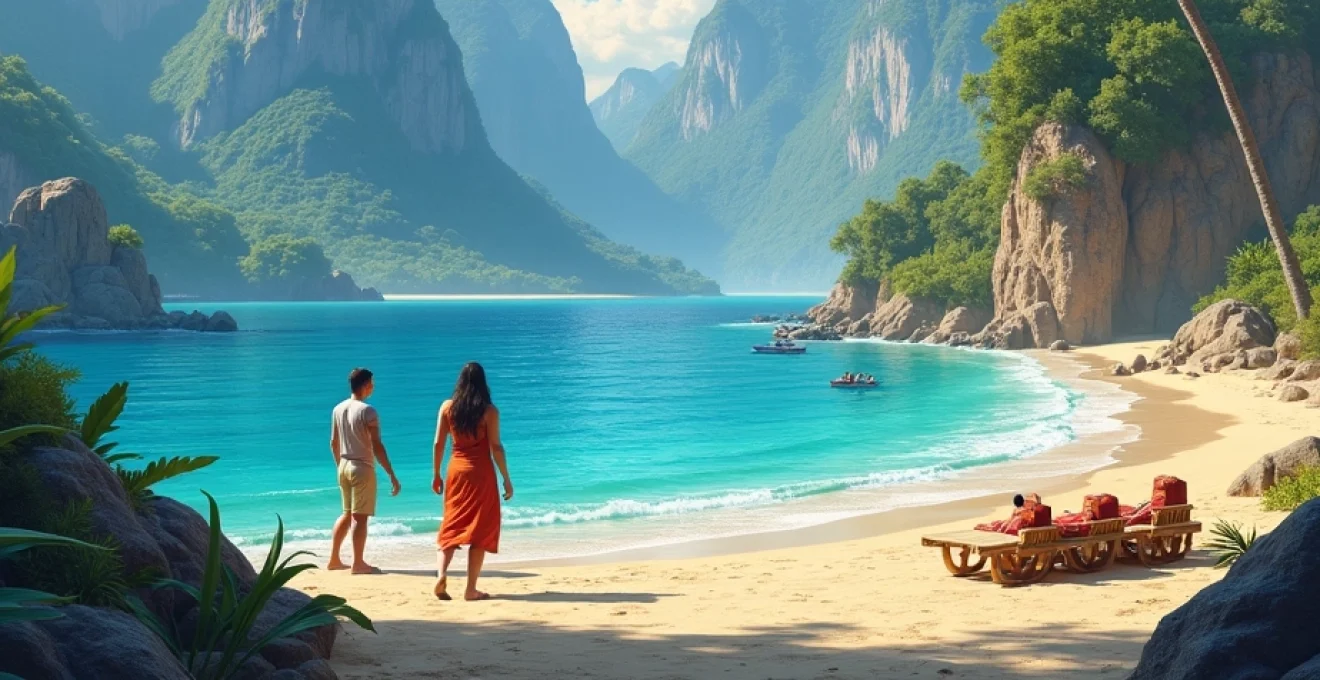
The world’s most photographed landmarks draw millions of visitors annually, creating bottlenecks that diminish the magic of discovery. While iconic destinations like Paris, Rome, and Bali have their undeniable appeal, an entire universe of extraordinary places exists beyond the tourist trails. These hidden sanctuaries offer authentic experiences where you can witness untouched natural beauty, encounter genuine local cultures, and enjoy the profound satisfaction that comes from true exploration.
In an era where social media has democratized travel inspiration, the challenge isn’t finding beautiful destinations—it’s discovering places where beauty remains unfiltered by crowds. The most rewarding journeys often lead to locations where your footsteps might be the first foreign ones in months, where conversations with locals aren’t scripted for tourism, and where the night sky still reveals its full celestial glory.
Uncharted islands of the south pacific
The South Pacific harbors countless islands that remain virtually untouched by commercial tourism, offering experiences that rival or surpass their famous counterparts. While destinations like Bora Bora and Fiji command international attention, lesser-known archipelagos provide equally stunning landscapes without the accompanying infrastructure and crowds.
Pristine beaches untouched by mass tourism
The remote atolls of Kiribati stretch across 3.5 million square kilometers of ocean, yet receive fewer than 6,000 visitors annually. Christmas Island, the world’s largest coral atoll, features beaches where you might walk for hours without encountering another soul. The sand remains untrampled, the coral reefs thrive in their natural state, and the rhythm of life follows tidal patterns rather than tourist schedules. These beaches offer something increasingly rare in our interconnected world: genuine solitude.
Tuvalu, comprising nine coral atolls, represents one of the least visited countries globally, with visitor numbers typically below 2,000 per year. The nation’s beaches stretch in pristine arcs, bordered by coconut palms and lagoons so clear you can observe tropical fish from considerable heights. The absence of large-scale tourism infrastructure means these shores maintain their natural character, where hermit crabs scuttle freely and nesting seabirds remain undisturbed by human presence.
Lush jungles teeming with exotic wildlife
The volcanic islands scattered throughout the South Pacific harbor ecosystems that evolved in isolation for millions of years. Vanuatu’s interior islands conceal rainforests where endemic species flourish away from human interference. The cloud forests of these volcanic peaks support unique flora, including rare orchids and towering kauri trees that predate human civilization in the region.
New Caledonia’s Grande Terre contains vast wilderness areas where you might trek for days without seeing another person. The island’s biodiversity rivals that of much larger landmasses, with numerous endemic species that exist nowhere else on Earth. These forests provide critical habitat for creatures like the kagu, a flightless bird found only in New Caledonia’s remote mountainous regions.
Unique cultures preserving ancient traditions
Remote Pacific islands maintain cultural practices that have remained largely unchanged for centuries. In the outer islands of the Marshall Islands, traditional navigation techniques using stick charts and celestial observation continue to guide inter-island travel. These navigational methods represent sophisticated knowledge systems that predate modern GPS technology by thousands of years.
The customary land tenure systems of many Pacific islands create natural barriers to mass tourism development. In places like the Solomon Islands’ remote provinces, village councils maintain strict control over land use, preserving both cultural sites and natural environments. Visitors who make the effort to reach these communities often find themselves welcomed into authentic cultural exchanges that provide insights into sustainable living practices developed over generations.
The most profound travel experiences occur when you step completely outside the familiar tourist infrastructure and encounter places where modern commercial tourism has yet to establish its patterns.
Hidden gems in the heart of europe
Europe contains numerous destinations that offer the continent’s characteristic charm without the overwhelming crowds that plague popular cities. These locations provide authentic European experiences while remaining accessible to travelers seeking something beyond the standard tourist circuit.
North Macedonia’s capital, Skopje, underwent massive reconstruction following a devastating 1963 earthquake, creating a unique architectural landscape that blends Ottoman heritage with bold modern designs. The city’s old bazaar remains one of the largest in the Balkans, yet receives a fraction of the visitors that crowd similar markets in Istanbul or Athens. Local artisans continue traditional crafts in small workshops where visitors can observe metalworking, textile production, and leather crafting techniques passed down through generations.
The country’s natural attractions include Ohrid, a UNESCO World Heritage site centered around one of Europe’s oldest and deepest lakes. The medieval churches dotting the lakeside contain frescoes dating back to the 11th century, while the clear waters support endemic species found nowhere else in the world. Despite its exceptional beauty and historical significance, Ohrid remains relatively unknown to mainstream European tourism.
Estonia’s Saaremaa Island represents another European treasure that has escaped mass commercialization. The island’s medieval castle in Kuressaare, dating to the 14th century, sits virtually empty compared to similar fortifications in Western Europe. The surrounding landscape features ancient meteorite craters, medieval windmills, and traditional thatched-roof farmhouses where families have lived for centuries. The island’s spa culture, utilizing local mud and mineral springs, offers authentic wellness experiences without the commercialized atmosphere of more famous European spa destinations.
Albania’s interior mountains contain villages where traditional lifestyles persist largely unchanged. The remote valleys of the Albanian Alps harbor communities where hospitality codes dating back centuries still govern interactions with visitors. These mountains offer some of Europe’s most dramatic hiking terrain, with peaks exceeding 2,500 meters and valleys that remain snow-covered well into spring.
Off-the-beaten-path adventures in south america
South America’s vast interior contains some of the world’s most spectacular natural wonders, many of which remain virtually unknown to international tourism. These destinations offer adventures that dwarf more famous attractions in terms of scale, beauty, and authentic cultural encounters.
Majestic waterfalls cascading through virgin rainforests
Venezuela’s Canaima National Park contains over 3,000 waterfalls, including Angel Falls, the world’s highest uninterrupted waterfall. However, the park’s remote tepuis (table mountains) harbor numerous other spectacular cascades that remain virtually unvisited. Salto Churún and Salto Sapo offer experiences comparable to Angel Falls but without helicopter tours or crowded viewing platforms. These falls plunge from heights exceeding 400 meters through pristine rainforest where indigenous Pemón communities maintain traditional hunting and gathering practices.
The Kaieteur Falls in Guyana represents another extraordinary cascade that receives minimal international attention despite being one of the world’s most powerful waterfalls by volume. The falls drop 226 meters over a sandstone cliff into a gorge surrounded by pristine rainforest. The surrounding area harbors rare species including the golden frog, found only in the spray zones of these falls, and numerous endemic plants adapted to the constant mist environment.
Colorful indigenous markets selling handcrafted goods
Ecuador’s interior provinces host weekly markets where indigenous communities gather to trade goods produced using traditional methods. The Guamote market, held each Thursday, brings together Quechua-speaking farmers from remote mountain communities who arrive on horseback or on foot to sell produce, textiles, and livestock. Unlike tourist-oriented markets in major cities, these gatherings serve genuine economic and social functions within indigenous communities.
The Otavalo market region extends beyond the famous Saturday market to include smaller weekly gatherings in surrounding villages. San Pablo del Lago and Cotacachi host markets where artisan families sell items they produce in their homes rather than mass-produced crafts. These markets offer opportunities to observe traditional weaving techniques, leather working, and woodcarving that have been refined over generations.
Ancient ruins shrouded in mystery
Colombia’s Ciudad Perdida (Lost City) requires a challenging four-day trek through dense jungle to reach, effectively limiting visitor numbers to serious hikers. This pre-Columbian settlement, built by the Teyuna civilization around 800 CE, predates Machu Picchu by approximately 650 years. The site contains over 200 stone terraces connected by an intricate network of paths and staircases carved into the mountainside.
Peru’s Chachapoya region contains numerous archaeological sites that rival Machu Picchu in historical significance but receive minimal tourism. The fortress of Kuelap, built by the Chachapoya people between 900-1100 CE, contains over 400 circular stone structures within massive defensive walls. The site’s remote location in Peru’s cloud forest region means that even during peak season, visitors often have the ruins to themselves for hours at a time.
Adventure in South America’s hidden places requires more than just physical stamina—it demands respect for indigenous cultures and pristine environments that have remained largely unchanged for centuries.
Secluded oases amidst vast desert landscapes
The world’s desert regions contain extraordinary landscapes that challenge perceptions about these environments. Far from being empty wastelands, remote deserts harbor unique ecosystems, geological wonders, and cultural sites that provide some of Earth’s most otherworldly experiences.
Shimmering salt flats stretching to the horizon
Beyond Bolivia’s famous Salar de Uyuni, numerous other salt flats around the world offer equally spectacular scenery without the tour groups. Iran’s Dasht-e Kavir contains salt formations that create natural sculptures resembling abstract art installations. These salt domes rise from the desert floor in fantastic shapes, their surfaces crystallizing into patterns that change with temperature and humidity fluctuations.
Australia’s Lake Eyre system comprises multiple salt lakes that fill with water only during exceptional rainfall events, creating temporary inland seas in the heart of the continent. During dry periods, the exposed lake beds reveal intricate salt crystal patterns and mineral deposits in colors ranging from pure white to deep pink. The surrounding desert supports hardy plant communities and adapted wildlife that have evolved to survive in this harsh environment.
Otherworldly rock formations sculpted by nature
Namibia’s Spitzkoppe region contains granite formations that rise dramatically from the desert floor, creating landscape features that appear almost alien. These ancient mountains, formed over 700 million years ago, have been sculpted by wind and rare rainfall events into fantastic shapes including natural arches, balanced rocks, and cave systems. The area contains significant archaeological sites with rock paintings dating back thousands of years, created by the San people who inhabited the region long before European contact.
Chad’s Ennedi Plateau showcases sandstone formations carved by wind and water into towers, arches, and canyons that rival those found in more famous desert regions. The plateau contains hidden valleys with permanent water sources that support oases ecosystems including date palms and various wildlife species. These oases served as crucial stopping points along trans-Saharan trade routes for centuries.
Starry night skies free from light pollution
Remote desert locations provide some of Earth’s darkest skies, offering astronomical viewing experiences impossible in populated areas. The Atacama Desert in Chile contains regions where annual rainfall measures less than one millimeter, creating atmospheric conditions ideal for stargazing. Professional observatories choose these locations specifically because the lack of water vapor and human activity provides exceptional clarity for both optical and radio astronomy.
Mongolia’s Gobi Desert offers vast areas where artificial light sources remain absent for hundreds of kilometers in any direction. The desert’s high altitude and dry climate create conditions where the Milky Way appears so bright it casts shadows on the ground. Local herder families, who continue traditional nomadic lifestyles, navigate using celestial markers and maintain detailed knowledge of seasonal star patterns developed over generations.
Undiscovered trails winding through majestic mountains
Mountain ranges around the world contain numerous trekking routes that offer experiences comparable to famous trails but without the permits, crowds, or commercialization that has transformed popular hiking destinations. These remote mountain regions provide opportunities for genuine wilderness experiences where self-reliance and navigation skills remain essential.
Tajikistan’s Pamir Mountains, often called the “Roof of the World,” contain trekking routes through landscapes that few outsiders have ever witnessed. The Pamir Highway passes through terrain exceeding 4,000 meters elevation, where traditional Kyrgyz and Tajik herders continue seasonal migrations with yak and sheep herds. The region’s isolation has preserved both natural ecosystems and cultural practices that provide insights into high-altitude adaptation strategies developed over millennia.
Pakistan’s Karakoram Range harbors numerous valleys accessible only on foot, where trekking routes pass through villages that maintain connections to the outside world only during summer months. The Hispar Muztagh region contains some of the world’s longest non-polar glaciers, with trekking routes that cross glacier systems exceeding 50 kilometers in length. These routes require advanced mountaineering skills and complete self-sufficiency, but offer access to mountain landscapes that rival anything found in more famous ranges.
The Caucasus Mountains of Georgia contain ancient trails that connected Europe and Asia along historic trade routes. The Tusheti region’s remote villages become accessible only when spring snowmelt opens the high mountain passes, typically between June and October. During this brief season, traditional festivals celebrate the opening of mountain pastures, and visitors can participate in authentic cultural celebrations that have continued for centuries without modification for tourist consumption.
Bhutan’s restricted tourism policy has preserved numerous trekking routes in near-pristine condition. The Snowman Trek, one of the world’s most challenging high-altitude routes, passes through landscapes where blue sheep, snow leopards, and other rare Himalayan species maintain viable populations. The trek’s difficulty and Bhutan’s tourism restrictions ensure that fewer than 200 people complete this route annually, preserving its wilderness character while providing sustainable income for local communities through guide and porter services.