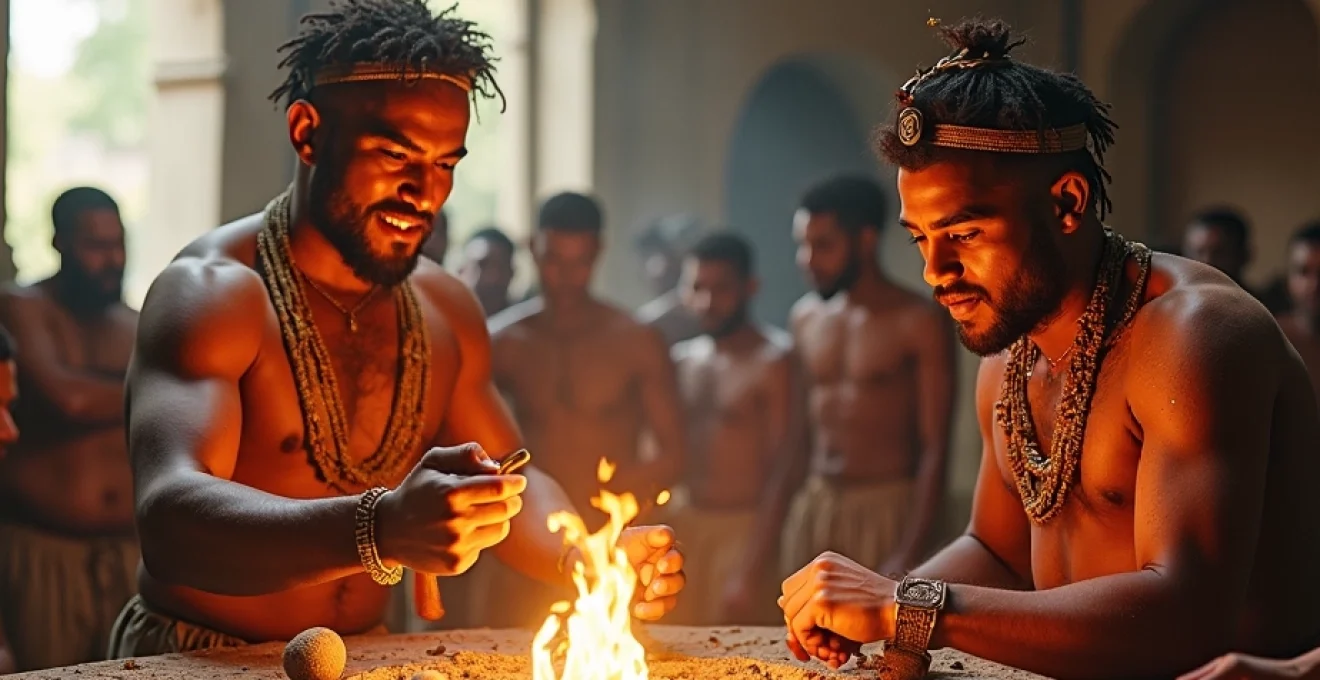
Throughout human history, ancestral rituals have demonstrated remarkable resilience, adapting and persisting across millennia despite dramatic cultural shifts, religious transformations, and technological revolutions. From the ancient burial practices discovered in Israeli caves dating back 100,000 years to the elaborate ceremonial traditions still practiced today, these sacred customs have served as bridges connecting contemporary societies to their deepest roots. The survival of these rituals reveals fundamental aspects of human nature—our need for meaning, community, and transcendence that transcends any single era or civilization.
Ancestral rituals passed down through generations
The transmission of ancestral rituals across generations represents one of humanity’s most enduring achievements in cultural preservation. Archaeological evidence from sites like Tinshemet Cave in central Israel reveals that our ancestors were engaging in complex burial rituals as early as 110,000 years ago, carefully arranging bodies in fetal positions alongside meaningful objects such as basalt pebbles, animal remains, and ochre fragments. These discoveries demonstrate that the ritualistic treatment of the dead emerged as a fundamental human behavior during the Middle Paleolithic era, establishing patterns that continue to influence modern ceremonial practices.
The mechanisms by which these ancient practices have survived reveal the profound human capacity for cultural memory. Unlike genetic inheritance, ritual transmission requires active participation and conscious choice from each generation. Elders serve as living repositories of ceremonial knowledge, embodying not just the actions but the deeper meanings embedded within each sacred practice. This intergenerational transfer creates what anthropologists term “cultural DNA”—patterns of behavior that persist across centuries through human agency rather than biological imperative.
Modern neuroscience provides fascinating insights into why certain rituals demonstrate such remarkable persistence. The trance hypothesis, developed by researchers including Oxford professor Robin Dunbar, suggests that synchronized ritual activities trigger endorphin releases that create profound bonding experiences. These neurochemical responses help explain why communities instinctively preserve practices that generate collective transcendence. When participants engage in ancient chants, dances, or ceremonial movements, they literally experience the same physiological states that connected their ancestors, creating an unbroken chain of shared consciousness spanning millennia.
The survival of ancestral rituals also reflects their remarkable adaptability. Rather than remaining static museum pieces, these practices evolve to meet contemporary needs while maintaining their essential spiritual core. The Islamic pilgrimage to Mecca exemplifies this dynamic preservation—while the fundamental elements of the Hajj trace back to pre-Islamic times, the rituals have incorporated modern logistics and technology without losing their transformative power. This adaptability ensures that ancient practices remain relevant and meaningful to successive generations.
Cultural traditions preserved across time
Cultural traditions serve as vessels for ancestral wisdom, carrying forward not just specific practices but entire worldviews and value systems. The preservation of these traditions across time demonstrates humanity’s remarkable capacity for cultural continuity, even in the face of dramatic social upheaval. Archaeological evidence suggests that some cultural practices have remained virtually unchanged for tens of thousands of years, indicating that certain human needs and responses to the sacred remain constant across vastly different historical contexts.
Oral histories shared by elders
The oral tradition represents perhaps the most crucial mechanism for preserving ancestral rituals across generations. In societies without written records, elder storytellers serve as living libraries, maintaining not only the specific details of ceremonial practices but also the contextual knowledge necessary to understand their deeper significance. These oral histories often contain layers of meaning that unfold only through repeated telling and careful listening, ensuring that each generation discovers new depths within familiar stories.
Research into hunter-gatherer societies reveals sophisticated methods for preserving ritual knowledge through oral transmission. Among the San Bushmen of southern Africa, ceremonial instructions are embedded within creation myths, genealogies, and seasonal stories that must be recited with precise accuracy. This integration of ritual knowledge with narrative creates multiple reinforcement mechanisms, making the information more memorable and resistant to loss or distortion over time.
Symbolic objects treasured for centuries
Physical artifacts serve as tangible links to ancestral practices, embodying spiritual significance that transcends their material properties. The Venus of Willendorf figurine, dating to approximately 30,000 BCE, continues to hold profound meaning for contemporary Pagans who see in its form representations of fertility goddesses and natural abundance. These sacred objects function as mnemonic devices, triggering memories of associated rituals and serving as focal points for ceremonial activities that connect modern practitioners with their ancient predecessors.
The preservation of ritual objects often involves sophisticated understanding of materials science and conservation techniques passed down through generations. Traditional craftspeople learn not only how to create ceremonial items but also how to maintain and restore them using methods that honor both the object’s spiritual significance and its physical integrity. This dual preservation—of both artifact and knowledge—ensures that future generations will have access to authentic tools for their ancestral practices.
Sacred spaces revered by communities
Geographic locations imbued with spiritual significance serve as permanent anchors for ancestral rituals, providing continuity across generations even when human communities change dramatically. Stone circles in England and Ireland, oriented to astronomical events and built during the third millennium BCE, continue to attract visitors who seek connection with ancient wisdom traditions. These sacred landscapes embody the intersection of human spiritual needs with natural phenomena, creating enduring pilgrimage destinations that transcend cultural and religious boundaries.
The transformation of pagan sacred sites into Christian churches represents a fascinating example of ritual continuity through religious adaptation. Rather than destroying indigenous holy places, early Christian communities often built their worship spaces around existing shrines, unconsciously preserving the sacred geography while adapting the associated rituals to new theological frameworks. This process of religious syncretism allowed ancestral practices to survive within altered but recognizable forms, ensuring their persistence across major religious transitions.
Adaptations of ancient rites in modern times
The evolution of ancestral rituals in contemporary contexts demonstrates their fundamental relevance to human spiritual needs, regardless of technological advancement or cultural sophistication. Modern adaptations of ancient practices reveal how timeless human concerns—trauma processing, community bonding, life transitions, and transcendent experience—require ritual frameworks that acknowledge both individual and collective dimensions of meaning-making.
Contemporary therapeutic applications of ancient ritual practices provide compelling evidence for their enduring psychological value. The Warrior Chorus Project, developed by Peter Meineck at New York University, uses ancient Greek dramatic traditions to help modern veterans process combat trauma. These therapeutic adaptations demonstrate that the same ritual mechanisms that helped medieval knights cope with moral injury through penitential practices remain effective for addressing contemporary psychological wounds. The success of such programs suggests that ancestral rituals contain insights into human psychology that transcend specific historical contexts.
Modern pagan movements represent perhaps the most direct adaptation of ancestral rituals to contemporary life. These communities draw inspiration from pre-Christian European traditions, archaeological discoveries, and ethnographic studies of indigenous practices to reconstruct meaningful ceremonial frameworks for modern spiritual seekers. Rather than attempting literal recreation of ancient practices, these movements focus on understanding the underlying principles that made ancestral rituals effective and applying those insights to contemporary needs and circumstances.
The integration of ancient ritual elements into mainstream religious practice illustrates another pathway for ancestral survival. Many Christian denominations have incorporated meditation techniques derived from ancient contemplative traditions, while Buddhist communities in Western contexts adapt traditional ceremonies to accommodate modern scheduling and lifestyle constraints. This selective adaptation allows ancient wisdom to remain accessible while acknowledging the practical realities of contemporary life.
Digital technology has created unprecedented opportunities for preserving and transmitting ancestral ritual knowledge. Online communities dedicated to traditional practices can share ceremonial instructions, discuss interpretations, and coordinate group activities across vast distances. Virtual reality technologies offer immersive experiences of reconstructed ancient sacred spaces, allowing people to engage with ancestral environments that would otherwise remain accessible only through archaeology and imagination.
Ceremonies connecting humanity with the divine
The profound human need for connection with transcendent reality has ensured the survival of ceremonial practices across every known culture and historical period. These rituals serve as technologies of the sacred, providing structured methods for accessing altered states of consciousness and experiencing dimensions of reality beyond ordinary perception. Archaeological evidence from sites like Tinshemet Cave reveals that humans have been developing sophisticated approaches to divine connection for over 100,000 years, suggesting that ceremonial practice represents a fundamental aspect of human nature rather than a cultural accident.
The universality of trance-inducing practices across diverse cultures provides strong evidence for their adaptive value in human evolution. From the drumming and dancing of African traditional religions to the chanting and meditation of Asian contemplative traditions, human societies have consistently developed techniques for altering consciousness and facilitating encounters with the sacred. These transcendent technologies appear to serve both individual psychological needs and collective social functions, creating shared experiences that bond communities while providing individuals with access to sources of meaning and guidance beyond the material world.
Offerings made to honor deities
The practice of making offerings to divine beings represents one of humanity’s oldest and most persistent ritual forms, appearing in archaeological contexts dating back tens of thousands of years. These ceremonial gifts serve multiple functions: they express gratitude for received blessings, request divine intervention in human affairs, and establish reciprocal relationships between human communities and spiritual powers. The material culture of offering reveals sophisticated theological understanding embedded within seemingly simple acts of giving.
Modern offering practices demonstrate remarkable continuity with ancient precedents while adapting to contemporary contexts and understanding. Hindu devotees continue to present flowers, food, and incense to deities in practices that trace back thousands of years, while contemporary pagan communities develop new approaches to honoring natural forces and ancestral spirits. These adaptations preserve the essential psychology of offering—the human need to give as well as receive in relationships with the sacred—while accommodating modern sensibilities and circumstances.
Prayers recited in sacred tongues
The preservation of ancient languages specifically for ritual purposes illustrates humanity’s recognition that certain forms of expression carry spiritual power that transcends ordinary communication. Sanskrit mantras, Hebrew prayers, and Latin liturgies continue to be recited by practitioners who may not understand their literal meaning but recognize their capacity to induce altered states of consciousness and facilitate connection with traditional spiritual lineages. These sacred languages function as bridges between contemporary practitioners and ancestral wisdom traditions, maintaining continuity across vast temporal and cultural distances.
Linguistic research into prayer traditions reveals sophisticated understanding of how specific sounds and rhythmic patterns affect human consciousness. The repetitive nature of many ancient prayers appears designed to induce meditative states, while the use of archaic language creates psychological distance from ordinary concerns and facilitates entry into sacred time. Contemporary neuroscience confirms that these traditional practices effectively alter brain states in ways that promote both individual well-being and group cohesion.
Dances performed with spiritual significance
Sacred dance represents perhaps the most embodied form of ancestral ritual, integrating physical movement, musical rhythm, and spiritual intention in practices that engage the entire human being. Archaeological evidence suggests that ritualistic dancing emerged alongside the earliest human communities, with cave paintings and artifacts indicating that synchronized movement played a central role in prehistoric ceremonial life. These embodied spiritual practices continue to provide contemporary practitioners with access to altered states of consciousness and collective transcendence that mirror the experiences of their ancient predecessors.
The neurochemistry of sacred dance provides scientific validation for its traditional role in spiritual practice. Research demonstrates that synchronized rhythmic movement triggers endorphin release and promotes social bonding in ways that enhance both individual psychological well-being and group cohesion. These findings help explain why dance-based rituals have persisted across virtually every human culture, serving essential functions that remain relevant regardless of technological advancement or social complexity.
Rituals marking life’s key transitions
Transitional rituals address fundamental human needs that remain constant across cultures and historical periods, ensuring their survival even when specific practices evolve dramatically. These ceremonies serve crucial psychological and social functions, helping individuals navigate major life changes while reinforcing community bonds and cultural values. The universality of rites of passage across human societies suggests that ritual marking of significant life events addresses deep-seated needs that transcend particular religious or cultural traditions.
The structure of transitional rituals typically follows patterns identified by anthropologist Arnold van Gennep: separation from previous status, transformation in liminal space, and reintegration with new identity. This three-phase process appears in contexts ranging from ancient initiation ceremonies to modern graduation celebrations, indicating that the underlying psychology of transition remains constant even as specific cultural expressions vary dramatically. Contemporary research in developmental psychology confirms that ritual marking of life transitions provides psychological benefits that promote healthy adaptation to change.
Birth celebrations welcoming new souls
Birth rituals represent humanity’s earliest ceremonial responses to the mystery of new life, addressing both the practical needs of mothers and infants and the spiritual significance of souls entering the world. Archaeological evidence from ancient burials includes infant remains accompanied by ceremonial objects, suggesting that human communities have recognized the sacred dimensions of birth for tens of thousands of years. These welcoming ceremonies serve multiple functions: they integrate new members into community life, invoke protective spiritual forces, and celebrate the continuation of ancestral lineages.
Modern birth celebrations demonstrate remarkable continuity with ancient precedents while incorporating contemporary understanding of child development and family dynamics. Naming ceremonies, baptisms, and blessing rituals continue to serve the essential function of formally recognizing new community members while adapting to diverse family structures and religious orientations. The persistence of these practices across secular and religious contexts indicates their fundamental importance for human social organization.
Coming-of-age ceremonies signifying personal growth
Initiation rituals addressing the transition from childhood to adulthood appear in virtually every known human society, suggesting that ceremonial recognition of developmental milestones serves essential psychological and social functions. These maturation ceremonies typically involve elements of challenge, instruction, and formal recognition that help adolescents understand their new roles and responsibilities while demonstrating community support for their development. The survival of coming-of-age rituals across cultures with dramatically different values and structures indicates their fundamental importance for human development.
Contemporary adaptations of traditional initiation practices reveal ongoing recognition that young people require structured guidance and recognition during the transition to adulthood. Programs combining outdoor challenges with mentorship, community service projects with ceremonial celebration, and educational components with spiritual exploration demonstrate creative approaches to meeting traditional needs within modern contexts. These adaptations preserve the essential psychology of initiation while accommodating contemporary understanding of adolescent development and social complexity.
Funerary rites honoring the deceased
Death rituals represent perhaps the most universal and persistent form of human ceremonial practice, appearing in archaeological contexts dating back over 100,000 years. The careful burial of human remains accompanied by meaningful objects demonstrates that even our earliest ancestors recognized death as a sacred transition requiring ritual attention. These memorial practices serve multiple functions: they provide structure for grieving processes, maintain connections between living and deceased community members, and address existential questions about the meaning of life and death that appear to be intrinsic to human consciousness.
The evolution of funerary practices reflects changing theological understanding while maintaining essential psychological and social functions. Contemporary memorial services often incorporate elements from multiple religious traditions, personalized tributes that would have been foreign to ancient practice, and technological innovations like video presentations and online memorials. Despite these adaptations, the core functions of death rituals—helping survivors process grief, celebrating the life of the deceased, and reinforcing community bonds in the face of loss—remain remarkably consistent with their ancient predecessors.