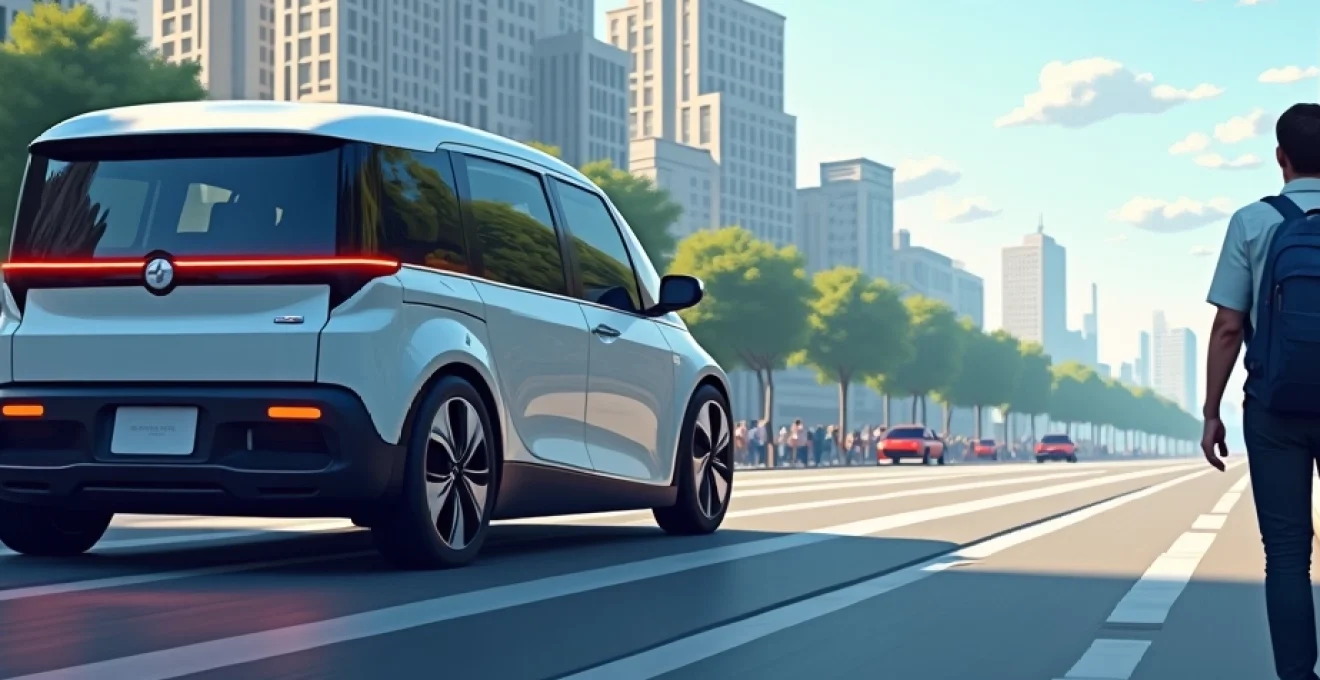
The transportation landscape stands at the precipice of unprecedented transformation. Revolutionary technologies are converging to reshape how humans move through space, promising to solve decades-old challenges while creating entirely new possibilities for mobility. From autonomous vehicles navigating bustling city streets to hyperloop pods racing through vacuum tubes at near-supersonic speeds, the future of transportation extends far beyond incremental improvements to existing systems.
This mobility revolution encompasses not just individual vehicles, but entire interconnected ecosystems that will fundamentally alter urban planning, environmental sustainability, and the very concept of distance. The European Commission’s ambitious strategy to achieve a 90% reduction in transport emissions by 2050 exemplifies the scale of change ahead, requiring nothing short of complete systemic transformation across all modes of transportation.
What makes this moment particularly significant is the convergence of multiple breakthrough technologies simultaneously reaching maturity. Artificial intelligence, advanced materials science, renewable energy systems, and sophisticated manufacturing processes are aligning to make previously science-fiction concepts increasingly viable. The question is no longer whether these revolutionary mobility solutions will emerge, but rather how quickly they can be safely integrated into our existing infrastructure and social systems.
Autonomous vehicles reshaping urban transportation landscape
Autonomous vehicles represent perhaps the most imminent and transformative change in personal mobility. These self-driving systems promise to revolutionize not just how we travel, but the entire structure of urban environments. The technology has progressed rapidly from experimental prototypes to sophisticated systems capable of navigating complex real-world scenarios, with companies like Tesla, Waymo, and Cruise conducting extensive testing programs across multiple cities.
The impact of widespread autonomous vehicle adoption extends far beyond the vehicles themselves. Smart traffic management systems will coordinate fleets of self-driving cars to optimize traffic flow in real-time, potentially reducing travel times by 30-40% in congested urban areas. These vehicles can communicate with each other and with infrastructure elements like traffic lights and road sensors, creating a synchronized transportation network that minimizes delays and maximizes efficiency.
Current autonomous vehicle technology operates at various levels of sophistication, with the most advanced systems achieving what researchers call Level 4 autonomy – capable of handling most driving scenarios without human intervention. However, the transition to fully autonomous transportation will likely occur gradually, with mixed fleets of human-driven and autonomous vehicles coexisting for years during the implementation phase.
Reduced traffic congestion in city centers
Autonomous vehicles possess the capability to travel much closer together than human-driven cars, a phenomenon known as platooning. When vehicles can communicate instantaneously and react with millisecond precision, the traditional safety buffers between cars become unnecessary. This increased road capacity could theoretically accommodate 2-3 times more vehicles on existing roadways without requiring additional infrastructure investment.
The efficiency gains compound when considering that autonomous vehicles can maintain optimal speeds and avoid the stop-and-go patterns that create traffic waves. Studies suggest that even with just 25% of vehicles being autonomous, overall traffic flow improvements become noticeable. At higher adoption rates, the coordinated movement of vehicle fleets could virtually eliminate the unpredictable congestion patterns that plague urban centers today.
Optimized parking spaces freeing up land
One of the most profound urban planning implications of autonomous vehicles involves parking infrastructure. Self-driving cars can drop off passengers and then relocate themselves to remote parking areas or continue serving other users through ride-sharing services. This capability could reduce the need for parking spaces in dense urban cores by up to 80%, freeing enormous amounts of valuable real estate for housing, parks, or commercial development.
The transformation of parking areas represents a massive opportunity for cities to reclaim space. In many urban centers, parking accounts for 20-30% of total land use. Converting these areas into green spaces, affordable housing, or community facilities could significantly improve urban livability while reducing the heat island effect created by large expanses of asphalt.
Increased safety for pedestrians and cyclists
Advanced sensor systems in autonomous vehicles provide 360-degree awareness that surpasses human perception capabilities. These vehicles use combinations of cameras, radar, lidar, and ultrasonic sensors to detect pedestrians, cyclists, and other vulnerable road users with remarkable precision. The systems can track multiple objects simultaneously and predict their likely paths, enabling preventive actions that human drivers might not notice until too late.
Machine learning algorithms continuously improve the vehicles’ ability to recognize and respond to complex scenarios involving pedestrians and cyclists. Unlike human drivers who may be distracted, tired, or impaired, autonomous systems maintain constant vigilance. This consistent attention, combined with faster reaction times, could reduce traffic fatalities involving vulnerable road users by 80-90% once fully implemented.
Hyperloop technology revolutionizing intercity travel
Hyperloop technology represents a quantum leap in ground-based transportation, promising to transport passengers and cargo at speeds approaching 700 mph through low-pressure tubes. This revolutionary concept, initially proposed by Elon Musk, uses magnetic levitation and near-vacuum conditions to eliminate the primary sources of friction that limit traditional transportation speeds. Several companies, including Virgin Hyperloop and The Boring Company, have successfully demonstrated key aspects of the technology through prototype systems.
The fundamental physics behind hyperloop systems involves creating a controlled environment where pods can achieve aircraft-like speeds while remaining on the ground. By removing air resistance through partial vacuum conditions and eliminating rolling friction through magnetic levitation, these systems can maintain high speeds with remarkably low energy consumption. Early calculations suggest that hyperloop networks could transport passengers between major cities while using less energy per mile than high-speed rail or commercial aviation.
Implementation of hyperloop networks would require substantial infrastructure investment, with elevated tube systems or underground tunnels connecting major population centers. However, the potential benefits are proportionally significant. A hyperloop connection between Los Angeles and San Francisco could reduce the current 6-hour drive or 1-hour flight to approximately 30 minutes of travel time. This compression of distance could fundamentally alter regional economic patterns and urban development possibilities.
The environmental advantages of hyperloop systems become particularly compelling when considering their energy requirements. Solar panels mounted on tube structures could potentially generate more electricity than the system consumes, creating net-positive energy transportation infrastructure. This renewable energy integration aligns perfectly with broader sustainability goals while delivering unprecedented speed and convenience for passengers.
Current hyperloop development faces several technical challenges, including maintaining vacuum conditions across hundreds of miles of tubing, ensuring passenger safety during emergency situations, and developing cost-effective construction methods for the extensive infrastructure required. Despite these hurdles, prototype testing continues to validate core technologies, with some systems targeting commercial operations by the early 2030s.
Flying cars taking personal mobility airborne
The emergence of practical flying vehicles marks a pivotal moment in transportation history, finally bringing science fiction concepts into commercial reality. Modern electric vertical takeoff and landing (eVTOL) aircraft represent sophisticated engineering solutions that overcome many historical barriers to personal aviation. Companies like Joby Aviation, Lilium, and EHang have developed working prototypes capable of carrying passengers safely through urban airspace while producing minimal noise and zero local emissions.
These aerial vehicles utilize distributed electric propulsion systems with multiple rotors or fans to achieve vertical flight capabilities similar to helicopters, but with significantly improved efficiency and safety characteristics. Advanced battery technology and electric motors enable quiet operation that makes urban deployment feasible without creating unacceptable noise pollution. The redundancy built into multi-rotor designs provides safety levels that meet or exceed traditional aviation standards.
The regulatory framework for urban air mobility continues evolving rapidly, with aviation authorities worldwide developing new certification processes specifically designed for eVTOL operations. These regulations must balance innovation with safety while addressing unique challenges like air traffic management in dense urban environments and integration with existing aviation systems.
Vertical take-off vehicles for urban commuting
Urban commuting applications represent the most immediate market opportunity for flying vehicles, addressing the persistent problem of ground-level traffic congestion. eVTOL aircraft can operate from small landing areas on building rooftops or dedicated vertiports, bypassing traditional transportation bottlenecks entirely. Initial operating ranges of 60-100 miles with 15-30 minute flight times make these vehicles ideal for connecting suburban areas with urban cores.
The operational economics of flying vehicles continue improving as battery technology advances and manufacturing scales increase. Current projections suggest that ride-sharing services using eVTOL aircraft could achieve per-mile costs comparable to premium ground transportation within the next decade, making aerial mobility accessible to a broader range of users beyond just luxury applications.
Aerial ride-sharing services decongesting roads
The emergence of aerial ride-sharing networks could fundamentally alter urban transportation patterns by providing rapid point-to-point connections that bypass ground-level congestion entirely. Companies are developing app-based booking systems similar to current ride-sharing platforms, but optimized for three-dimensional routing and air traffic coordination. These services could handle thousands of daily flights across urban areas while maintaining safety through sophisticated air traffic management systems.
Fleet operations will likely begin with professionally piloted aircraft before transitioning to fully autonomous flight operations as the technology matures and regulatory approval expands. This phased approach allows operators to build safety records and public confidence while gradually reducing operational costs through automation.
Skyports integrating with public transport hubs
The success of urban air mobility depends heavily on seamless integration with existing transportation networks. Skyports – specialized facilities for eVTOL operations – are being designed as multimodal hubs that connect aerial services with trains, buses, and other ground transportation options. These facilities incorporate charging infrastructure, passenger amenities, and air traffic control capabilities while minimizing their urban footprint through vertical design approaches.
Major airports and transit centers are already planning skyport integration to extend their service areas and reduce ground transportation bottlenecks. This integration creates opportunities for travelers to use aerial vehicles for the first or last segments of longer journeys, potentially reducing total travel times significantly while improving overall transportation system efficiency.
Maglev trains connecting cities at high-speed
Magnetic levitation technology represents a mature yet continuously evolving approach to high-speed ground transportation. Unlike traditional rail systems that suffer from friction and mechanical wear, maglev trains float above dedicated guideways using powerful electromagnetic fields, enabling sustained speeds exceeding 300 mph in current commercial applications. Japan’s operational maglev line between Tokyo and Nagoya will reach speeds of 374 mph when completed, demonstrating the practical viability of this technology for intercity connections.
The fundamental advantage of maglev systems lies in their elimination of physical contact between train and track, which removes the primary limitations that constrain conventional rail speeds. Without friction losses, these systems can maintain high speeds with exceptional energy efficiency while providing remarkably smooth rides for passengers. The absence of mechanical contact also dramatically reduces maintenance requirements for both vehicles and infrastructure, potentially offering lower long-term operational costs despite higher initial construction investments.
Current maglev technology utilizes either electromagnetic suspension (EMS) or electrodynamic suspension (EDS) systems to achieve levitation. EMS systems use attractive forces between electromagnets on the train and ferromagnetic rails to maintain levitation, while EDS systems rely on repulsive forces between superconducting magnets and induced currents in metallic tracks. Each approach offers distinct advantages in terms of stability, efficiency, and operational characteristics.
Frictionless propulsion enabling faster rail travel
The propulsion systems in maglev trains use linear motors that directly accelerate the train without requiring mechanical transmission systems. These linear motors create traveling magnetic fields along the guideway that interact with magnets on the train to generate forward thrust. This approach eliminates the wheel-slip limitations that constrain conventional trains during acceleration and enables rapid speed increases that would be impossible with traditional rail technology.
Advanced control systems regulate the magnetic fields with millisecond precision to maintain optimal levitation height while maximizing propulsion efficiency. The result is acceleration performance comparable to commercial aircraft combined with the ability to maintain maximum speeds for extended periods without mechanical stress or degradation. This capability makes maglev systems particularly suitable for connecting cities separated by 100-500 miles, where their speed advantages over conventional transportation become most pronounced.
Underground vacuum tubes for intercity routes
The concept of underground vacuum tube systems for maglev trains represents an evolution that could achieve even higher speeds while minimizing surface land use and environmental impact. By operating in reduced-pressure environments similar to hyperloop technology, these systems could potentially reach speeds approaching 500 mph while maintaining the proven safety and reliability characteristics of conventional maglev operations.
Underground tube construction offers additional advantages including weather independence, reduced noise impact on surrounding communities, and the ability to follow more direct routes without surface topography constraints. However, the construction costs and technical complexity of underground vacuum systems remain significant challenges that will require substantial technological advances and financial investments to overcome.
Improved energy efficiency compared to planes
Energy consumption analysis reveals that maglev systems can transport passengers with 30-50% less energy per mile than commercial aviation, particularly for routes under 600 miles where aircraft spend proportionally more time in energy-intensive takeoff and climb phases. The regenerative braking capabilities of maglev systems allow them to recover and reuse energy during deceleration, further improving overall efficiency compared to other high-speed transportation modes.
When powered by renewable electricity sources, maglev networks could provide essentially carbon-neutral transportation for millions of passengers annually. This environmental advantage becomes increasingly important as governments worldwide implement policies to reduce transportation emissions and meet climate targets. The combination of speed, capacity, and environmental benefits positions maglev technology as a key component of sustainable transportation networks for the coming decades.
Micromobility devices transforming last-mile journeys
The micromobility revolution encompasses a diverse array of lightweight, often electric-powered vehicles designed to efficiently cover short distances that are too far to walk comfortably but too short to justify larger transportation modes. Electric scooters, e-bikes, electric skateboards, and various emerging vehicle types are fundamentally changing how people navigate urban environments, particularly for the crucial “last mile” connections between major transportation hubs and final destinations.
These devices address a persistent gap in urban transportation systems where traditional options like cars or buses prove inefficient or inconvenient for short trips. Studies indicate that approximately 60% of urban trips are under three miles – a distance range perfectly suited for micromobility solutions. The rapid adoption of shared micromobility services demonstrates significant pent-up demand for flexible, convenient alternatives to walking or driving for these short-distance journeys.
The technology underlying modern micromobility devices has advanced dramatically, with improved battery energy density, lighter materials, and sophisticated control systems making these vehicles more practical and appealing to mainstream users. Electric assist systems enable users to travel farther and faster than traditional bicycles while requiring less physical effort, expanding the potential user base to include people who might not otherwise consider cycling for transportation.
Integration with smartphone applications has created seamless user experiences where people can locate, unlock, and pay for micromobility services through single apps. This technological integration eliminates many traditional barriers to adoption and creates new business models based on shared access rather than individual ownership. The data generated through these connected systems also provides valuable insights into urban mobility patterns and infrastructure needs.
The environmental benefits of micromobility adoption are substantial, with studies showing that each shared e-scooter or bike can replace multiple car trips per day. Even accounting for the manufacturing and operational impacts of these devices, the net reduction in urban emissions and congestion creates significant environmental improvements. As cities struggle to meet air quality standards and climate goals, micromobility represents one of the most immediately implementable solutions for reducing transportation-related pollution.
Infrastructure adaptations to support micromobility continue evolving, with cities worldwide implementing dedicated bike lanes, scooter parking areas, and charging stations. The compact size and low infrastructure requirements of these devices make them particularly attractive for dense urban areas where space is at a premium. Unlike major transportation projects that require years of planning and construction, micromobility infrastructure can be implemented quickly and cost-effectively while providing immediate benefits to users.
Safety considerations remain paramount as micromobility usage expands, with ongoing development of improved helmet designs, better lighting systems, and enhanced vehicle stability. Education programs and infrastructure improvements like protected bike lanes are helping to reduce accident rates and improve the safety profile of these transportation modes. As the technology continues maturing and urban infrastructure adapts, micromobility devices are poised to become integral components of comprehensive urban transportation networks.